
- What are the main elements of your travel budget? — The “Big Five” cost categories are pre-departure expenses, transportation, accommodation, food & drink and experiences. These are all affected by duration, number of destinations and your travel style are the main contributors to your travel budget.
- Create your own country-by-country budget — Use our Travel Budget Template (below) to get an approximate estimate of how much your trip will cost. You can adjust your trip or your budget to fit.
- Sources of cost information — Do not rely on guidebooks or the commercial travel industry for costs. Better current information is available from other online sources.
The presumed cost of a trip is often the greatest discouragement for aspiring travelers. It shouldn’t be. At least get the facts and create your own travel budget before you decide whether your trip is affordable or not.

The notion that travel is expensive is encouraged by travel industry advertising. You’re led to believe that a couple of weeks in some tourist trap costing thousands of dollars or euros is some kind of bargain. It’s not. This perception is boosted by the popular media, whose content leans to rapture about some boutique hotel or elite adventure experience. But these snippets of marketing propaganda — and the associated costs — are just a small part of the travel universe.
Find out for yourself what your dream trip will cost — you might be surprised at how affordable it can be.
The “Big Five” expense lines
We categorize our travel budget into the “Big Five” summary lines:
- Pre-departure expenses — Passport, visas, vaccinations, travel insurance, luggage, clothing, maybe a digital device or two and other gear. You might already have some of it.
- Transportation — Your initial and return flights, other flights during your trip, trains, buses, ferries, taxis, tuktuks, rented motorbikes and more.
- Accommodation — You have to sleep somewhere every night: hotels, guesthouses, hostels, B&Bs… wherever you lay your head.
- Food & drink — You can eat at fancy restaurants or street stalls, from markets and delis or prepare at least some of your own food. Alcoholic beverages can put a serious spike in your expenses.
- Experiences — If your budget is constrained, save on the other four Big Five lines and use the money for Experiences: concerts, festivals, hot air balloons, safaris, scuba diving, river cruises, yoga retreats, trekking… the possibilities are endless. This is why you’re traveling. This is the heart and soul of your trip. This is where the memories are. This is where you money should go.
For many travelers, the most costly line is Accommodation, followed by Transportation. If you’re not a wealthy person buying elite experiences, but still manage to make Experiences your biggest expense line, then… congratulations! You are a master traveler.
Factors affecting your budget
- Duration — Simple enough… the longer your trip, the more it will cost.
- Destinations — It’s also pretty obvious that where you go affects your trip cost. France costs much more than Indonesia.
- Travel style — The speed, comfort and other style elements range from backpacker basic to 5-star luxury.
- Timing — High season and popular events increase demand for transport, accommodation and experiences, usually with a parallel increase in prices.
These factors are described in detail below.
Making a travel budget that works
Even if your proposed trip is too costly now, you have options: reduced duration, alternative destinations, later start date and more.
If you work through your plans and travel style you can come to a fairly good estimate of your travel budget. There are many techniques to estimate costs and make savings, so there’s a good chance that, even if your initial budget is too high, a few compromises can make it work. And that doesn’t mean sacrificing your style so much that you won’t enjoy the trip. At the very least, you’ll have a target figure to save for your journey.
The good news is that it’s not that hard to estimate your travel budget.
- Travel Budget Template — To get to grips with your budget, we offer a spreadsheet that includes pre-departure expenses as well as the costs of your travel.
- Sources of price information — We point you to sources of country or even city-specific price information. Enter the numbers in your spreadsheet.
- Revise your budget — If your total budget is too high, you can go back and adjust the spreadsheet until you’re satisfied with the total cost.
If you don’t have a computer or aren’t into spreadsheets, you can still use the spreadsheet template to build your budget with a pencil and calculator.
Factors that affect travel cost
Shifting the weight of these elements can have a powerful influence on your travel budget.
Duration
It’s dead obvious that the longer you travel the more it will cost. If

you’ve done an honest budget (and not assumed that you will be a maniac super-frugal traveler), you should have a reasonable idea how long your money will last.
Once you’re on your trip, you’ll get a clear idea of how much it actually costs and can adjust your estimate for the duration.
As you watch your money supply dwindle, you have four choices:
- Economize — Depending on where you are, your travel skills and your tolerance for “roughing it,” you can drive your costs down to extend your trip.
- Work — It’s impossible to get paid work in most countries while you’re traveling. Yet, it’s worth checking out. The famous “teaching English” thing usually isn’t an option if you don’t have some kind of certification.
- Get more money from home — Maybe you have assets back home that you can liquidate. Get your brother to sell your car. Ask your parents to replenish your bank account. There are ways!
- Prepare to go home — Don’t lose the plot and run out of money in some distant land. Just don’t. Buy that ticket and go home. If you screw up and run out of money, your embassy or high commission will probably front you a ticket, but you have to pay it back.
Destinations
Where you go and how long you stay in your destinations clearly impacts budget.
- Countries — Many long-term travelers favor middle and poor countries because the average daily cost is much lower than the same goods and services would cost in rich countries.
- Cities — Some cities are expensive for any style of travel. A budget hotel in Zurich, Tokyo or New York will still cost plenty. But so will mid-range hotels in many African capitals, where decent budget hotels are scarce. Second tier cities in the same countries are always cheaper. If you get away from big cities, or at least the business and tourist zones in them, your costs will go down.
- Number of destinations and distance between them — The more destinations you have on your itinerary and the farther the distance between them, the more you will have to spend on transport. This is especially true when traveling around rich countries. If it’s necessary to use air transport to cross oceans or cover long overland distances (Perth to Sydney or São Paulo to Lima), cost will go up.
Travel style

Your travel style — your minimum need for comfort and speed — will correlate closely with cost. For example, going from A-to-B by air instead of bus or train will cost more. High quality accommodations night after night, week after week, will be the largest budget line in no time. Fancy restaurant dining and alcohol will also push up costs.
- Is this your first DIY trip? — It’s hard to estimate what your travel style will be if you haven’t done independent travel before, or if you haven’t done so in the same type of country (rich, medium or poor).
- Food & drink — If you simply must eat in restaurants all the time and in a medium to high standard of establishment at that, your costs will rise rapidly. And if you like to drink alcoholic beverages, especially in the evening at bars and clubs, you’ll burn through money in rich countries. If lots of drinking is your thing, middle and poor countries are much cheaper.
- Experiences — You travel to have experiences and many of those experiences come at a price. If you’re traveling über-cheap, you might have to forego some of the world’s top attractions because of the steep admission. It would be a shame to be in Paris and not do a few of those classic tourist things. But, you might think it’s okay, that you’ll be back in Paris with more money some day. But if you’re in Cambodia and forego Angkor Wat, what are the chances of a return visit? Spend the money and go.
- Going local — You can attempt to live like a local when it comes to transportation, accommodation and food & drink. In rich countries, you should still be fairly comfortable, although it can be costly. Try going local in Oslo. In poor countries it’s the opposite — it’s physically and mentally challenging to live like the average Tanzanian.
- Ultra-cheap travel hacker — Caution: It’s foolish to budget your big trip ultra cheap if you haven’t done it before. Some travel hackers get around on next to nothing, but the style requires extreme financial discipline, lots of time flexibility and a tolerance for uncertainty and discomfort. It’s okay to try, but if you’re finding it hard and you’re not enjoying your trip, be financially prepared to move your travel style upmarket. That usually means a higher daily spend and a shorter trip.
Timing
There are several timing strategies that you need to consider, but these two have a heavy bearing on cost.
- Season — Will it be high season, “shoulder” season or low season? Shoulder or low season will often (but not always) bring about lower air transport and accommodation costs.
- Popular events — Popular events are crowded for a reason and maybe you want to be there, too. But local costs, especially accommodation, can see significant price rises when demand far exceeds supply.
Travel Budget Template

Click here to download the Excel file. The spreadsheet is completely open for editing, so you can hide and unhide countries and experiences. You can even add to them if you want. But if you’re not comfortable with spreadsheets then enter country names and numbers only in the grey boxes.
In the template, you will find 3 sheets that bring together both the pre-departure expenses and the costs of your travel itself.
- Budget Summary
- Pre-departure Costs
- Trip Costs
Budget Summary

- Total funds available — Enter the amount you have (or hope to have by your departure date).
- When the rest of the template is completed, Total Cost will be deducted to show whether you’ve got enough money or need to alter your plans.
- Trip costs by country — Replace the names (“Country A”, “Country B”…) with the names of the countries you plan to visit.
- The amounts are taken from entries you will make to the “Trip Costs” sheet.
- By default, all the countries are checked. But, if you don’t have enough money for the whole trip, you can uncheck a country to see the effect on your total trip budget.
- If you don’t want to cut a country, go to the Trip Costs sheet and edit the number of days on some countries. You can also go deeper and cut specific lines, like Accommodation (stay cheaper) or Experiences (cut or shorten an expensive one).
- Trip costs by type of expense — This shows totals from both the other sheets. You can get an idea of relative costs and consider adjustments, if necessary.
- These numbers are not adjusted if you uncheck countries above. To see changes here, you have to make them in the other two sheets.
Pre-departure costs

If you’ve done independent travel before, you may not need much. There are alternatives for every process and every item on the list. Click on any of the green row labels to go to an article that will help you determine whether or not you need an item and what your options are.
- Line items — Enter the best numbers you can for any line where you need the process or article. Otherwise, please leave the cell blank.
- Total pre-departure costs — This number is carried to the Budget Summary.
Trip costs

These are all the costs you might incur once you’re on your way and traveling.
- Days in-country — The countries you re-named in the Budget Summary sheet are listed here in the same order.
- Enter the time in days you estimated for each country.
- Major flights — Most trips begin and end with a flight. Enter the estimated costs here.
- We don’t include them in the first and last countries, in case you decide to uncheck one of those countries.
- Budget items — These are the in-country costs for every country you plan to visit. Again, the country names you selected are listed at the top.
- Transportation — Enter the numbers for each leg you know about. Never mind the short and cheap journeys.
- Accommodation — Here you need an average per day cost. The spreadsheet will then multiply by the number of days in the country (above) to come up with a total accommodation estimate.
- Food & drink — This works the same way as accommodation. Enter your estimated per day cost and a total will be calculated.
- Experiences — We show just 3 of the available 40 experience lines. Enter costs for major activities. While most or all will be unique to one country, it’s possible that you will do the same experience in different countries.
- Contingency — Enter a percentage that will carry across all the in-country sub-totals. Consider 10% a minimum that might apply to a longer trip. Shorter trips should start at 15%. Be as generous as you can.
- No matter how much effort you put into costing, travel is a notoriously inexact undertaking. Maybe a great new experience presents itself, or you can get only a business-class ticket, or you have to replace a lost item or pay for medical services. Plans get changed. There are also “miscellaneous” expenses that don’t fit into any of the the main budget lines, including gifts and souvenirs, mailing stuff home, replacing worn-out clothing and so on.
Where to find cost information
There are so many destinations, so many ways to get there, so many places to stay a night, so many different foods to eat and beverages to drink, so many experiences to do. How can you budget for them?
It’s pointless to get too detailed budgeting travel cost. You could spend countless hours chasing down specific numbers. Instead, you need a rough idea of prices, enough to ensure that your available funds will cover all the expenses of your trip… with a little extra, just in case.
- Web sources of budget numbers — Use websites that survey and compile daily travel cost estimates by country. Then you can fill in the gaps or confirm earlier numbers by consulting websites that focus on specific types of cost such as transport, accommodation or food.
- Pad the numbers — Keep in mind that price survey sites vary in their results, so you can’t rely too much on a low cost. It’s safer to default to the higher estimate.
- Beware seasonal and popular event price bumps — Price estimates are averages for the year, so high season prices could be higher, especially for accommodation. A popular event can also drive up accommodation costs.
- Add contingency budget — Creating your budget is inexact, so it’s advisable to add a contingency cost of 10%. This is different from the contingency line for the whole country budget. This one is to cover inaccuracy in the source numbers or your inability to get the quoted price. The other one is to provide budgetary flexibility for unexpected opportunities and problems.
You don’t want to be running out of money on the other side of the planet.
Pre-departure item costs
Pre-departure costs are often underestimated because travelers focus on the trip itself. Since they’re mostly comprised of services (such a medical appointments) and goods (such as luggage and clothing), prices are quite accessible.
Each of the green labels in the Pre-departure costs sheet is linked to an article on the topic. From most of the articles you can find links to recommended products and services with current prices.
You don’t have to source prices from our recommendations of course. You can do a search for products and services in your home country, see what else is offered and at what price.
In-country travel costs
The world is huge and prices change constantly, so how can you find the cost of mid-range travel to Prague or budget travel to Cape Town?
Several websites offer average daily costs by country or city. None is comprehensive — where one is missing cities, another has thin data. There are entire countries that are not covered by any of them — Bhutan, anyone? For countries “off the beaten traveler path” you will have to cobble together budget estimates using budget line tools (transport, accommodation, food etc.) below.
We suggest you consult all three “daily cost sites.” Each has a unique methodology, so each comes up with different cost estimates. By comparing their results and your own critical estimation, you should come up with a credible number for your budget.
There’s a sample search at the end, where we price travel to Thailand.

Budget Your Trip has to be the simplest means to find a daily average travel cost figure for your budget because it’s the only one with cost indexes for countries (as well as cities). Using crowd-sourced contributions from real travelers, the site offers Budget, Mid-range and Luxury daily cost estimates for 114 countries and over 2000 cities. You can even convert from the local cost to the currency of your choice.
Make sure you understand what goes into the calculation. For example, alcohol is not included, so, if you drink, you’ll have to add it from one of the other daily cost sites or from focused sites listed below. For some cities, the information is thin — just a couple of cost categories are listed or costs for all the budget levels are the same (indicating just a single contributor).
On Budget Your Trip you can create your own budget and track it while you travel. As a benefit to all travelers, you can have your actual numbers contributed anonymously to the Budget Your Trip database. We strongly encourage travelers to participate for the benefit of all.

PriceofTravel.com has daily travel cost listings for 202 cities worldwide, with heavy concentration on Europe and the Caribbean. Although the list is short, it covers the most popular travel destinations.
Read the FAQ page so that you know what the numbers mean. Since Price of Travel doesn’t rely on crowd-sourcing its data, doing annual updates in-house, it may be more accurate than the other two sites.
Backpacker Index
The World Backpacker Index (130 cities) can be seen as a whole or broken down by continent. Click on any city to get price components:
- A dorm bed at a good and cheap hostel
- 3 budget meals
- 2 public transportation rides
- 1 paid cultural attraction
- 3 cheap beers (as an “entertainment fund”)
3-star Traveler Index
For those whose style is a bit higher than Backpacker, Price of Travel has a Europe 3-star Traveler Index (56 cities) and an Asia 3-star Traveler Index (31 cities). Cost estimates are comprised of:
- One night in the cheapest 3-star hotel available with a desirable central location and mostly positive reviews. Hotel prices are per person based on double occupancy, so the full nightly rate is double what is listed for each city.
- Two 3-kilometer taxi rides per day (one ride paid per person)
- One cultural attraction, such as a popular museum, per day
- Three meals per day using the top end of the range of our “budget meals” for each city
- Three beers (or wine) each day as an “entertainment fund.” Non-drinkers might have dessert and coffee or attend a local music performance instead, so this is a general benchmark that should be proportional for each city.
More details
From the Home Page menu, you can go to specific cities for more detailed information, including local currency breakdown of the components of the indexes. You can also change the display currency.
- Hotels — Price ranges for each quality (1-5 star).
- Hostels — Listed price ranges, where they exist.
- Activities — This part is limited to prices of just a few major attractions. Although some of the attractions may be in your To Do list, don’t get bogged down collecting $10 expenses.
- Transportation — Lists a few types of urban transport, including from airports.
- Food & drink — Budget meals, beer and sometimes street food.

Numbeo.com carries city-level travel cost data for 857 cities, but does not present country-level data. Since your budget is at the country level, Numbeo is best used in combination with Price of Travel and Budget Your Trip.
There’s plenty of distracting (but interesting!) information on Numbeo. To find what you need for budgeting:
- Go to Numbeo — From the home page, choose > Travel > Travel Prices and pick your destination country from the drop down list. (Not all countries have data.) Example: Bosnia & Herzegovina
- Choose a city — Choose a city from the list (some countries have one or none). Example: Sarajevo.
- Go to the bottom of the page — Scroll down below the list of prices to a blue-bordered box with “Backpacker estimated cost per day” and a “Business or regular tourist estimated cost per day”. Example: Sarajevo Backpacker = $38.09 and Business or regular tourist = $107.28.
- Repeat at least one more time — Repeat for one or more other cities to smooth any anomalous prices and get a sense for the whole country. For some countries, there will be only one city.
Backpacker estimated cost per day:
- Minimum price of 1 and 2 star hotels (25th percentile, which means that 25% of the hotels in the range are cheaper, while 75% are more expensive)
- 1 meal at McDonalds or similar
- 1 meal in inexpensive restaurant
- 1 soft drink
- 1 water
- 1 domestic beer
- 4 one-way tickets on public transport
Travel (mid-range) cost per day
- Minimum price of 3 and 4 star hotels (25th percentile)
- 3 meals in mid-range restaurants
- 6 drinks (1.5 X each of water, soft drink, domestic beer, international beer)
- 4 short taxi rides
Like Budget Your Trip, Numbeo relies on crowd-sourced data, which can lead to odd results where there’s only one or two contributors. How can Chittagong, Bangladesh be the 5th most expensive city in Asia for backpackers, with a daily cost of $91.96? For details, see their methodology page.
Test: costs for Thailand
Suppose you want Thailand on your itinerary and need a daily travel cost. Only Budget Your Trip has country-wide cost estimates. For all three sites, we’ll look at 2015 prices for Bangkok and Chiang Mai.

With this much variation, how can we interpret these costs? Remember that the data sets are not entirely comparable — they don’t include the same components in their bundle of costs. Look at the range and estimate on the high side. For all of Thailand, regardless of city, here are our estimates:
- Budget (Backpacker) = $25
- Mid-range = $55
- Luxury = $130
Transportation costs
Instantly find approximate transportation costs for each leg of your journey.

Using Rome2rio.com, you can get costs for your transport segments, including options for different modes of transport. The estimates in the front end of the app are for right now, not some future date, and aren’t necessarily the best prices you could find doing a deeper search. Note that Rome2rio is an ambitious app, but doesn’t always present all the options. The app will no doubt get better in time, but you may have to augment information for less-traveled routes or where you see something missing (see example below).
- Go to Rome2rio — Go to rome2rio.com and enter the segment where you enter the country. (You can use the same technique to find the international flights at the beginning and end of your trip.)
- Choose your transport option — Different modes of transport may be offered, depending upon availability. Choose your mode depending on your travel style, cost and practicalities. Even if an option seems available, it may not be practical. Borders are often a problem because public land transport doesn’t link up very well at many crossings. In large rich countries, such as the US, Canada and Australia, trains and buses have very limited networks and timetables. Flights are most practical for long distances and private vehicles are used for everything else. If a route looks impractical, you should seek an alternative.
- Take the higher cost estimate — There are many factors that go into the costs, so it’s sensible to choose the higher figure.
- Tally all the segments for the country — Add up the segment where you entered the country, plus all the intercity legs. (Don’t include the segment where you exit the country; that will be included in the next country.) Now you have a total transportation cost for all the legs in that country.
- Add 10% — Prices may not be what you encounter when you arrange your actual travel, so bump up the cost estimate.

Example: You arrive in Bangkok on an international flight from Jakarta. Then you make one round trip north to Chiang Mai and one round trip south to Krabi and end up back in Bangkok. We will assume a budget trip with green sensitivity (no domestic flights). We also assume trains are a better experience than buses.
- Jakarta to Bangkok — Fly = $202
- Bangkok to Chiang Mai — Train = $25.
- Chiang Mai to Krabi — Train + bus = $51.
- Krabi to Bangkok — Bus = $33. (Missing option: the bus to Surat Thani and train to Bangkok is not presented.)
- Total cost = $311.
- Add 10% = #342.
- Total budget / green transport cost to and in Thailand = $350.
You have the option of checking other sites as well:
- Goeuro.com — This site has flight, train and bus routes, prices and booking for Europe only. There are handy filters when you get to the point of booking, but it annoyingly pops open the Airbnb web page for your destination.
- Seat61.com — For trains and ferries, the best general source is Mark Smith, the Man in Seat 61. This site has information on rail travel all over the world. That includes links to public and private rail companies where you can get prices.
- Busbud.com — This start-up wants to be the global source for bus information and booking, but it’s early days yet and their network is not wide outside South America. If they’re thin, try searching “[country name] bus booking” to see what comes up. Many countries have at least one bus booking website.
Accommodation costs
Find average accommodation cost for your travel style in just 5 minutes.

Trivago.com is an aggregator that will find prices from many OTAs. (TripAdvisor doesn’t have the needed filters.) Don’t be worried by the long bullet list below — it’s simple and quick.
- Go to Trivago — Go to Trivago.com. In the Search field, enter the name of your destination country (not a city, unless you’re going to just one city in that country).
- Date and duration — Enter a 1-night stay sometime during when you expect to be in the country. This should capture seasonal price variations, unless you plan to be there over the seasonal transition. Check if there are any popular events that could increase the prices. Don’t put in the entire duration of your stay in the country, since resulting prices could reflect discounts for long stays in one lodge.
- Room type — Type of room defaults to Double, but you can change that if you want.
- Stars — On the left side, choose the star quality of lodge that suits your travel style. You can choose more than one. Note that star quality is not uniform from country to country and that the bottom category is both 1-star and zero stars.
- Rating — Choose the top rating level (Excellent). You can expand to the next level down if you want, which should drop average prices a bit. If you’re going for the 0-1 star quality category, it’s best to stick with the Excellent category only, unless that leaves you with too few options.
- Price — Don’t adjust the slider, but do check “Show only available hotels.”
- Top options — Choose WiFi. As a DIY traveler, you rely on being connected. This filter is particularly important in poor countries, since lodges are much less likely to have WiFi. Leave the rest of the filters.
- Extra Filters — Leave these alone unless you’re traveling with children or have accessibility issues.
- Confirm your filters — Up at the top of the list of lodges, you’ll see a small box, “[X] out of [Y] hotels”. The drop down will show what filters and options you’ve chosen.
- Sort by… — The other small box at the top of the list defaults to “Sort by Popularity”, but you should change it to “Focus on Price”. That’s because Trivago seems to override Star ratings; a 0-1 star pick will inexplicably produce lodges at $200 and up. A 1-star hotel for $450 in Thailand has got to be a mistake. “Focus on Price” defeats this anomaly.
- Add the list of lodges — Get your calculator and add-up the offered price for all the lodges in the list. Normally there will be 25 lodges from all over the country, with a concentration in the most popular cities and resort areas.
- Calculate the average — Divide the total by 25 or less that 25 if “X” in the “[X] out of [Y] hotels” box is less than 25. The result is the rough average cost per night of lodges in your style range in that destination country.
- Add 10% contingency — Round up by 10% to be safe and enter the number in your budget.
Example:
- Country = Thailand for 1 night in February 2016
- Style = 0-1 stars
- Rating = Excellent
- Options = WiFi
- Average cost per night = $14.52
- Add 10% = $15.97
- Average budget accommodation in Thailand = $16/night
Food & drink costs
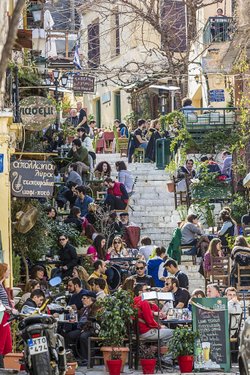
Food and drink depends so much on your travel style that the range of average daily cost can be huge.
- Restaurant or not? — What’s your split between restaurant meals, street food, delicatessens, grocery stores and fresh food markets?
- Restaurant quality — If you use restaurants, what quality do you require?
- Alcohol & coffee — If you drink alcohol or designer coffee, your daily travel cost can go way up, especially in rich countries.
- Breakfast included? — In many countries, lodges commonly include breakfast, so remember to exclude it from your travel cost.
- Cheaper countries — As with so much else, food and drink are inexpensive in middle and poor countries compared to rich countries.
How to estimate restaurant costs

A simple web search can yield some helpful information: “average food cost in [country]”. Another technique uses TripAdvisor.
- TripAdvisor — Go to TripAdvisor.com. Enter the name of the city you’re going to and click “Restaurants” in the menu bar.
- Select filters — Down the left side are some filters — select the price range that matches your style.
- Survey the results — The restaurants displayed will show price ranges — use a medium to high figure from the range to budget your food cost for one meal. Pay attention: lunches are usually cheaper than dinners, even for a similar menu.
- Adjust for beverages — These prices do not include drinks — alcoholic drinks can raise the cost of the meal by a huge percentage. The daily cost websites above can provide an estimate for beverages or you can check the sites below.
Alcoholic beverages
If you like a drink, it will add to your daily average travel cost. Whether that’s a little or a lot depends upon what country you’re in… and how much you imbibe. Prices can vary wildly, even between neighboring countries, depending upon how much the government wants to regulate your behavior, squeeze you for tax or (all too often) both — always buy your maximum duty-free limit before crossing from the US into Canada or from anywhere into Scandinavia. It also depends upon your taste, since quaffing a pint of local beer will be much cheaper than sipping a finger of single malt.
- Beer Price Index — You can get an idea of beer prices at both supermarkets and bars in 75 (mostly European) cities from the Beer Price Index. It’s not the whole world, but it appears to be updated annually.
- pintprice.com supplies beer prices for most countries. The information is crowd-sourced, so it’s erratic. There’s no date stamping or number of contributions to arrive at a price. Yet, if you look for a low price, it’s probably the price from a store, while high prices are from bars.
Average food and drink cost per day
Apart from restaurant prices, you’ll need to estimate the cost of store-bought food, delicatessen food, street food and beverages. Assume that the cost of buying from food stores, delicatessens or street food stalls will be about half as much as a cheap restaurant. This is a wobbly estimate, more true of rich countries than poor ones, where the difference between market food and street food may not be much.
Experience costs

There are so many things to do that it’s impossible to suggest a
means to check prices apart from straightforward internet search: [country] [activity name] [cost] or [country] [activity name] [price]. If those searches don’t zero on on costs, drop the last search term and go with [country] [activity name].
- International prices — Realize that search results are likely to show the most commercially astute vendors. For example, if you search for “Nepal trekking company,” you’re more likely to find the larger companies quoting international prices. Smaller, local companies offering similar quality services will cost less. For potentially costly activities relying on larger companies who focus on moneyed tourists can skew your budget way too high. Check page 2 and beyond in the search results.
- Date of information — Check the date of any information you find. Experience costs change often.
- Traveler forums — Unfortunately, traveler forums are poor sources of price information. You’ll have to dig long and hard to find anything current and credible.
TripAdvisor can sometimes provide guidance, but only for high style travelers willing to pay international prices. If your travel style is more modest, at least you can see a “ceiling” amount, knowing you will not pay more by arranging the activity locally.
- TripAdvisor — Go to TripAdvisor and enter the destination where you want to do the activity.
- Things to Do — In the “What are you looking for?” box, pick “Things to Do.”
- Attraction — Use the “Attraction Type” filter on the left to narrow your search. With luck, the activity you want will be among them.
- Scroll to find prices — Some activities will not show any price at all. Only those activities that can be booked through TripAdvisor will appear.
- Price ceiling — Use these prices as a benchmark for the most expensive cost you will find for the activity.
Less useful sources
- Travel guide books — One of the main purposes of guidebooks is to offer travel cost information, but you should only use them if you can’t get specific information from more current sources on the Internet. Keep in mind that travel guide prices will likely be 2+ years old, so you have to assume that prices in local currency have risen modestly with the low inflation most countries have experienced in recent years.
- Blogs — Search for blogs where the blogger seems credible, travels in a style similar to yours and whose information is recent. However, finding useful information in blogs is like panning for gold — you could spend hours searching, reading reams of fluff and find nothing. This also applies to aggregators of blogs and forums. In our opinion, the time invested is not worth it, with the exception of off-the-beaten-path destinations that are discussed nowhere else. Do a search for the destination and you might get lucky.
- Commercial travel industry — Don’t use prices offered by the commercial travel industry to budget your travel cost. There are multiple problems with their prices. Because the target customers are short-term vacationers, the quality (or at least the price) of accommodation tends to be high. Any activities included are no doubt much more expensive than you could get by booking locally. The industry also likes to quote on packages of bundled services (flights, local transport, accommodation, even food and activities) that you can’t pick apart.